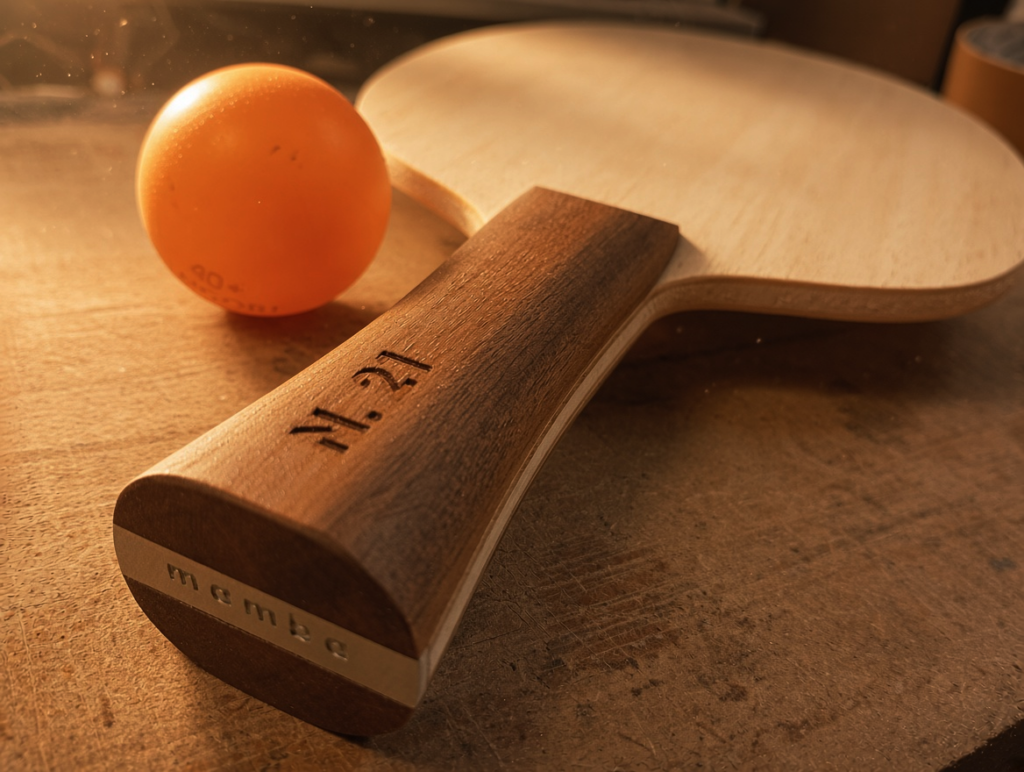
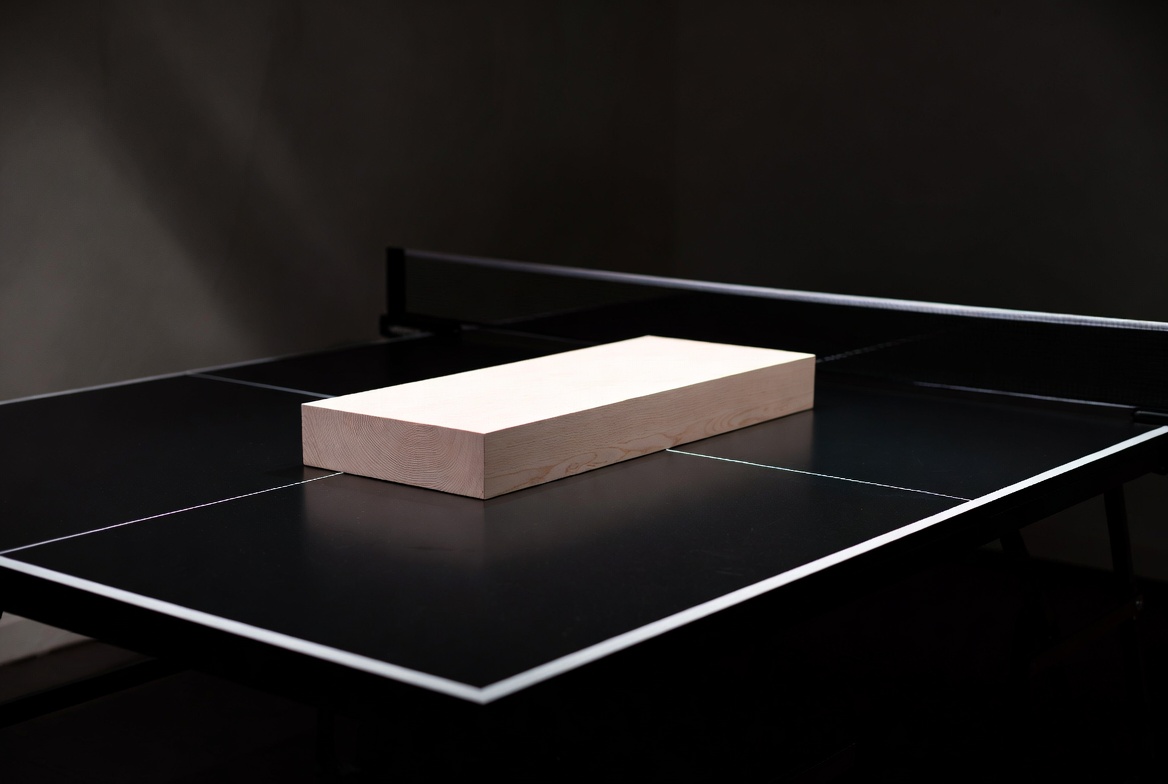
Ayous (Triplochiton scleroxylon), also known as abachi, samba, obeche, or wawa, is undoubtedly the most ubiquitous wood species in modern table tennis blades. It forms the core of over 90% of the 5-ply and 7-ply blades on the market.
At Mamba Blades, we chose ayous as the core of our SIGNATURE collection for a very simple reason: it offers the perfect balance between lightness, controlled elasticity, and a lively feel. Let’s discover why this African wood species has become essential for offensive and all-round players who refuse to choose between speed and touch.
Origin and physical characteristics
Ayous grows in the humid secondary forests of West and Central Africa (Cameroon, Nigeria, Congo, Ivory Coast). It is a fast-growing species, often FSC certified in sustainable concessions. Its density is exceptionally low: around $380\text{ kg/m}^3$ ($0.38\text{ g/cm}^3$), making it one of the lightest woods used in racket manufacturing.
Its Monnin hardness is very low (~1.1), its Janka hardness is around 430 lbf, and its modulus of elasticity (MOE) is close to 7,260 MPa. These values reflect a porous, flexible, and highly elastic structure, capable of returning energy efficiently without excessive rigidity.
Technical advantages in racket manufacturing
- Extreme lightness: it significantly reduces the total weight of the racket (often 80-85 g for a SIGNATURE ayous), thereby reducing arm fatigue during long sessions.
- Controlled elasticity: it provides a progressive spring effect – soft contact = maximum absorption, powerful hit = explosive bounce.
- Ideal compatibility: it pairs perfectly with koto, limba, walnut, or hinoki outer plies, creating highly balanced constructions.
- Ease of artisanal machining: wood that is easy to work with, glues well, and withstands the thermal pressures of our French manual processes without warping.
Concrete impact on play
In a Mamba Blades racket, the ayous core increases dwell time (ball-racket contact time) by 15 to 20% compared to stiffer cores like pure paulownia. This facilitates heavy topspins, deep chopped serves, and precise blocks near the table. The bounce is lively but never uncontrollable: the racket catapults on crisp attacks while remaining very forgiving on soft touches.
For a modern offensive player who plays close to the table or at mid-distance, it is ideal: speed without brutality, spin without loss of precision. Less stray vibrations, more direct feedback—exactly what demanding competitors are looking for.
Ayous at Mamba Blades
We exclusively select high-quality ayous for our SIGNATURE models and several PRO models. Combined with premium outer layers and sometimes natural biocomposites, it allows us to produce lightweight rackets (85 g on average), highly maneuverable, and equipped with a large sweet spot.
This lightness combined with natural elasticity makes our models particularly suited for varied offensive styles: loopers, counter-attackers, all-round players. True to our eco-friendly commitment, every piece of ayous used complies with the strictest environmental standards.
Ayous is not just a lightweight wood: it is the beating heart of a balanced, reactive, and lively racket. If you are looking for a racket that responds instantly to your intent—soft when you control, explosive when you attack—try a Mamba Blades SIGNATURE Ayous. You will immediately feel why this African wood species has become the global benchmark. Ready to discover the true balance between control and power? Order your racket today and feel the difference of French craftsmanship.


