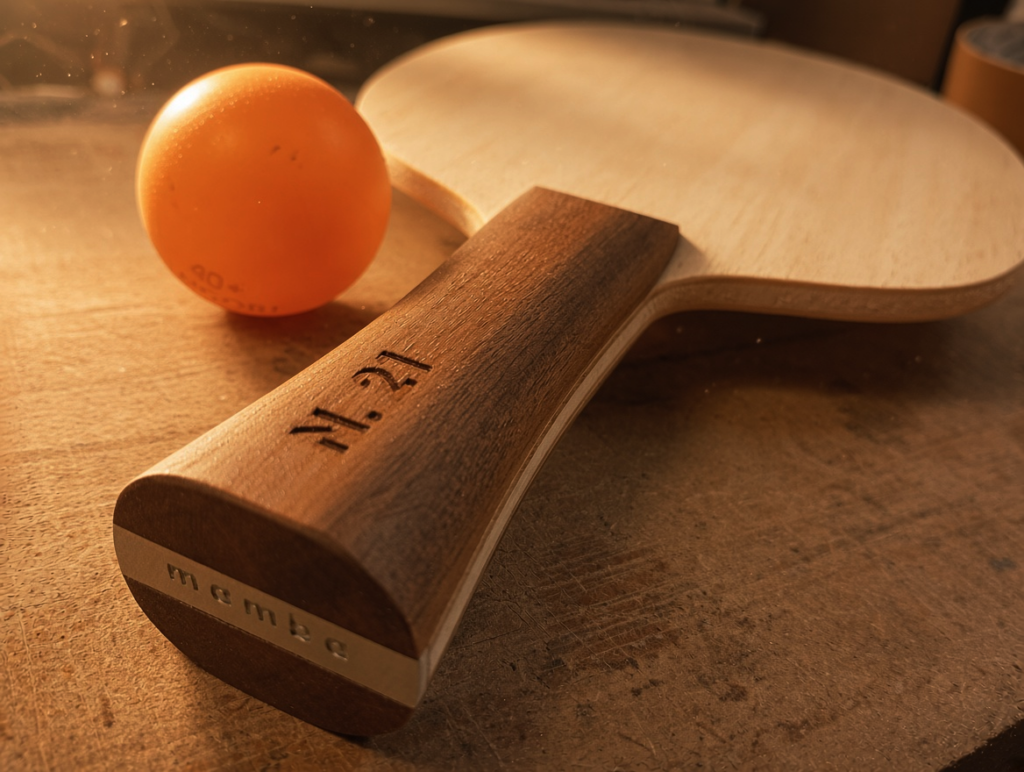
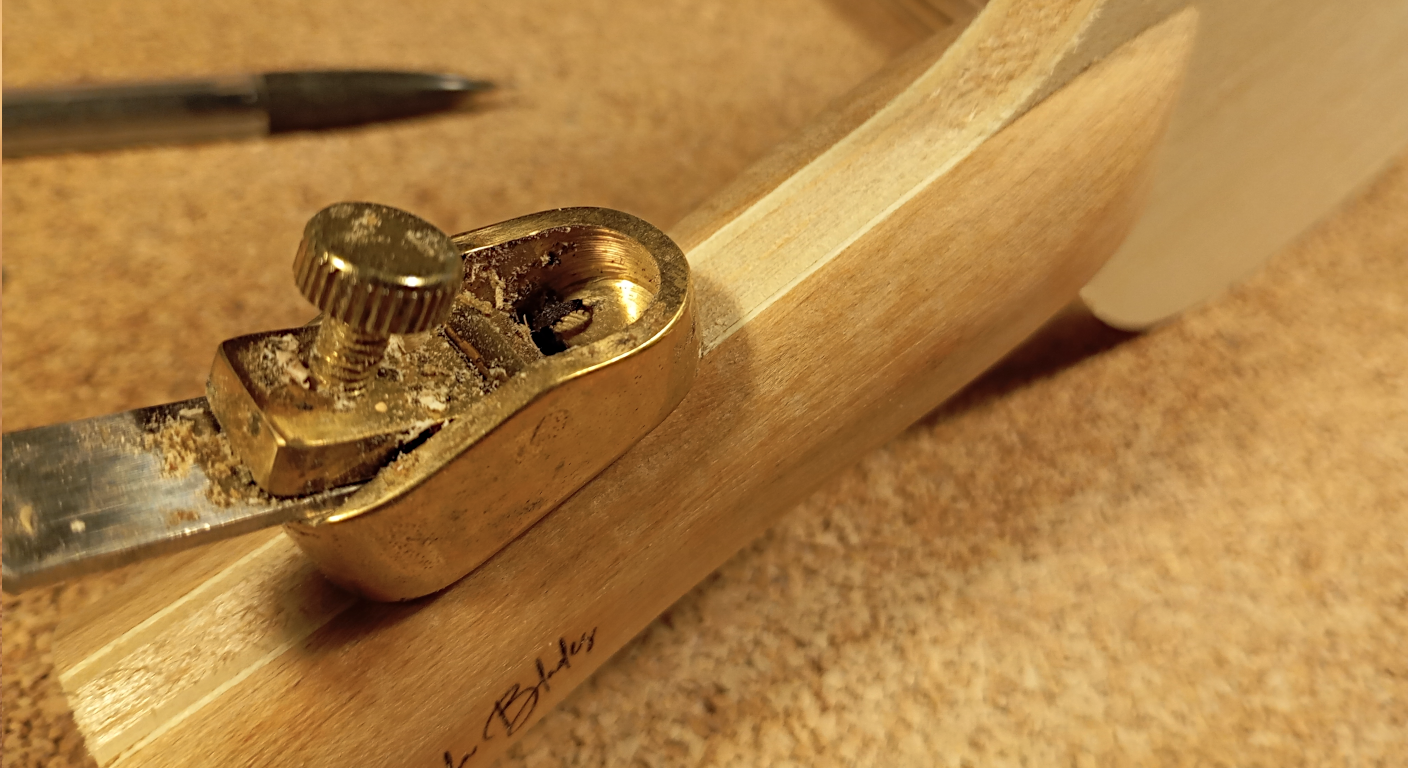
Between classical craftsmanship and sports lutherie
In recent years, artisanal table tennis blades have multiplied.
Faced with industrial production, many players are turning to smaller makers, drawn by the promise of manual work and greater singularity.
But “artisanal” doesn’t always mean the same thing.
There is an important difference between a handmade blade… and a blade designed with a true requirement for precision.
Classical craftsmanship: a fine intention
Most artisanal blades share obvious qualities:
- A handmade touch
- Limited production
- Attention to aesthetics
- A desire to stand out from industrial production
These blades often bring more character than mass-produced models.
However, they also present recurring limitations:
- Variable consistency from one copy to another
- Un contrôle parfois insuffisant des paramètres techniques (poids, équilibre, fréquence)
- A more empirical than methodical approach
- A focus sometimes more marked on appearance than on actual behavior in play
The intention is good.
But the technical requirement is not always at the same level.
The Mamba Blades approach: Sports Lutherie
At Mamba Blades, we do not define ourselves merely as an artisanal manufacturer.
We ground our work in an approach we call Sports Lutherie.
This means that each blade is conceived as an instrument:
- The material is listened to
- Plies are rigorously selected
- The balance is worked with precision
- The feeling is considered a central criterion, rather than a secondary detail
We are not just looking to make a beautiful blade.
We are looking to make an accurate blade.
The concrete differences for the player
What distinguishes a Mamba blade from a classic artisanal blade can be concretely felt:
1. Consistency
Each unit is inspected. Weight, balance, and general behavior are not left to chance.
2. Feeling precision
The feedback in the hand is clearer, more readable, more reliable..
3. Technical consistency
Construction choices (wood species, thicknesses, potential biocomposite reinforcements) respond to a precise playing intention.
4. Finishing standards
The work on the handle, rounding, face, and details is not secondary. It is part of the overall experience.
What Mamba does not strive to be
We do not claim to be “more artisanal” than others.
We do not play the card of purely romantic authenticity.
Our standard is elsewhere:
in accuracy, in repeatability, in the blade’s ability to genuinely prolong the player’s intention.
A blade can be handmade and remain imprecise.
A blade can be beautiful and lack consistency.
At Mamba, the goal is for each piece to be both singular… and reliable.
Ultimately
The difference between a classic artisanal blade and a Mamba Blades blade is not just a matter of method.
It is a difference in philosophy.
On one hand, manual work often guided by experience and intuition.
On the other, an approach that combines artisanal craftsmanship with a requirement for precision worthy of lutherie.
The result is felt on the table.


